Best Wireless Gaming Headsets 2026
Cut the cable without cutting quality. These 5 picks cover every budget from $79 to $349 — ranked by 2.4GHz latency, battery life, audio quality, and mic clarity.
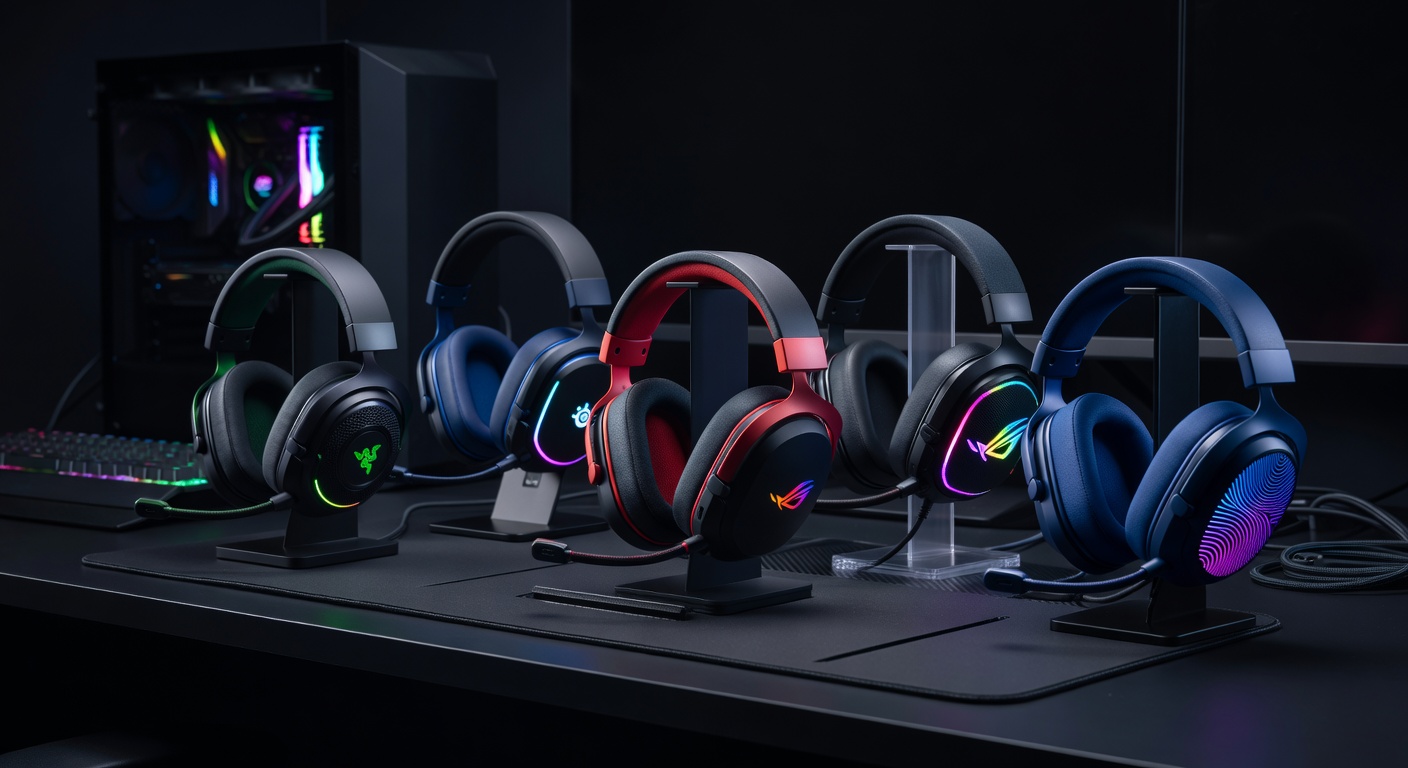
Quick Picks
| Best For | Pick | Price |
|---|---|---|
| Budget wireless | HyperX Cloud Stinger Core Wireless | ~$79 |
| Mid-range | SteelSeries Arctis Nova 3 Wireless | ~$129 |
| Premium competitive | Corsair HS80 RGB Wireless | ~$129 |
| PS5 / PlayStation | Sony Pulse 3D Wireless | ~$99 |
| Best overall / flagship | SteelSeries Arctis Nova Pro Wireless | ~$349 |
2.4GHz wireless vs Bluetooth: for gaming, always use 2.4GHz. Bluetooth has higher latency (~80–200ms) — fine for music, but you'll hear audio lag in-game.
The 5 Best Wireless Gaming Headsets — Reviewed
HyperX Cloud Stinger Core Wireless
The Cloud Stinger Core Wireless brings HyperX's proven comfort formula to wireless without breaking $80. The 2.4GHz connection via USB dongle keeps gaming latency low — this isn't Bluetooth audio delay, it's proper low-latency wireless. At 275g it's lighter than many wired headsets, and the swivel-to-mute mic is convenient. Battery at 17 hours is usable for casual to semi-regular sessions. The sound quality won't blow audiophiles away, but for gaming it gets the job done at a price that's hard to argue with.
- 2.4GHz wireless — actual low-latency gaming connection
- Lightweight and comfortable for long sessions
- Best price point for wireless gaming audio
- 17hr battery — recharge more often than premium options
- No Bluetooth — PC or console only, no mobile use
SteelSeries Arctis Nova 3 Wireless
The Arctis Nova 3 Wireless is the standout at this price tier because of two things: 38-hour battery life on 2.4GHz and simultaneous dual-connection (2.4GHz for gaming + Bluetooth for your phone). You can take a Discord call on your phone while gaming without unplugging anything. The ClearCast Gen 2 mic with AI noise cancellation is better than what competitors offer at this price. Sound extends down to 10 Hz — you'll feel bass impacts in games that lesser headsets can't reproduce.
- 38-hour 2.4GHz battery — charge weekly, not daily
- Simultaneous 2.4GHz + Bluetooth — game + phone at once
- 10 Hz low-end extension — better bass than competitors here
- AI-enhanced ClearCast mic is above average for this price
- ~$129 — a bit above true budget, but worth the step
Corsair HS80 RGB Wireless
The HS80 RGB Wireless's key stat is Corsair's Slipstream wireless technology at ~10ms latency — among the lowest for any wireless gaming headset. For competitive FPS players who want wireless without any perceptible audio lag, this is the pick. The 50mm drivers (vs the Nova 3's 40mm) deliver wider driver coverage and tend to produce more spacious soundstage — useful for footstep tracking. The broadcast-grade flip-to-mute mic performs at a level above the price. Dolby Atmos support adds spatial audio for compatible games.
- ~10ms Slipstream latency — lowest in this price range
- 50mm drivers produce wider soundstage for positional audio
- Broadcast-grade mic quality far above price class
- Dolby Atmos support
- 20hr battery — less than the Nova 3 at same price
- No Bluetooth for mobile multi-device use
Sony Pulse 3D Wireless
Sony built the Pulse 3D specifically to work with the PS5's Tempest 3D AudioTech engine. On PlayStation 5, the positional audio experience is noticeably better than third-party headsets that approximate the same effect. The USB-C wireless dongle plugs directly into the PS5's front port for plug-and-play setup. The built-in dual microphones (beamforming array) capture your voice clearly. At $99, it's significantly cheaper than every multi-platform option while delivering a better PS5-specific audio experience than headsets costing twice as much.
- Native PS5 Tempest 3D AudioTech integration — better than simulated 3D
- Plug-and-play USB-C into PS5 front port
- $99 for a genuinely PS5-optimized experience
- 12hr battery — the shortest on this list
- PS5-focused — not optimized for PC competitive play
SteelSeries Arctis Nova Pro Wireless
The Arctis Nova Pro Wireless is what wireless gaming audio looks like when no compromises are made. The dual-battery hot-swap system means you never wait to charge — swap the depleted battery for the charging spare in the base station and keep playing. The Hi-Fi certified 10–40 kHz frequency response lets you hear the full spectrum of in-game audio, including sounds that narrower headsets literally cannot reproduce. Active Noise Cancellation blocks your environment. The retractable AI ClearCast mic is broadcast-quality. At $349, it's the price of three decent wired headsets — but nothing else in wireless gaming audio does all of this at once.
- Dual-battery hot-swap — unlimited playing time
- Hi-Fi 10–40 kHz range hears what lesser headsets can't
- ANC blocks environmental noise for total focus
- Retractable mic — sleek when not in use
- $349 — flagship pricing requires genuine commitment
- Heavier than budget options
Wireless Gaming Headset FAQ
2.4GHz vs Bluetooth — which should I use for gaming?
Always use 2.4GHz for gaming. Bluetooth latency ranges from 80–200ms depending on codec, which is perceptible as audio lag in game. 2.4GHz wireless gaming headsets achieve 10–20ms latency — functionally identical to wired. Use Bluetooth for passive listening, music, or phone calls.
Is wireless latency actually a problem for competitive gaming?
With 2.4GHz wireless headsets, latency is not a meaningful competitive factor. The gap between 10ms (Slipstream) and 20ms (HyperSpeed) is below human perception. Visual monitor latency (your frame time) is a far larger variable. The latency concerns that were valid for wireless headsets in 2010 don't apply to modern 2.4GHz solutions.
What battery life should I look for?
For casual gaming (1–2 hours daily): 17–20 hours is sufficient. For regular sessions (3–5 hours daily): aim for 30+ hours so you charge roughly once a week. For marathon/professional use: the Arctis Nova Pro's dual-battery hot-swap system is the only option that truly never runs out.
Do I need virtual surround sound in a wireless headset?
For FPS gaming, a wide natural stereo soundstage (from good driver placement and large 50mm drivers) is often more accurate for positional audio than simulated surround sound. Virtual surround introduces processing that can make sounds feel artificial. If your headset supports it (like the HS80 with Dolby Atmos), experiment with both — preference varies by game.